






July is Disability Pride Month, and to celebrate this we are releasing a series of blogs on the topic of Disability. If you haven’t already, go and read our first blog of the series (Disability Pride Month 2026: Where did it all begin?)! In this instalment we are going to take a look at the Dropped Kerb Effect.
What is the Dropped Kerb Effect?
The topic of accessibility is becoming more prominent across the world: from building designs to working conditions and social media posts. In the past, and sometimes still today, these requirements can seem to be a hassle (for example, remembering to put alt-text on every Instagram picture!), however these are usually small things you can do to ensure that as many people as possible are included.
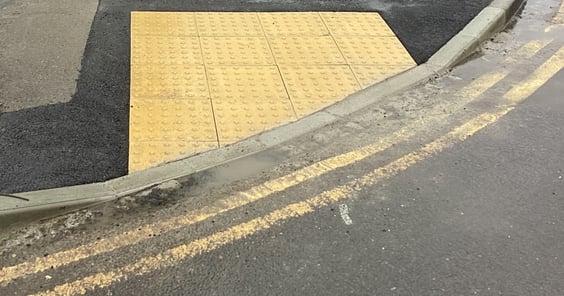
The dropped kerb effect (or curb cut effect) approaches accessibility from the other direction, and examines the accessibility features that have spread beyond the disabled community and become part of everyone’s life. It takes its name from dropped kerbs, which were predominantly introduced on road corners for wheelchair users, but are now used by anyone with prams, suitcases, bikes and more!
Accessibility Innovations in Technology
There are many, many examples that we could talk about, so we have focused specifically on technology that most of us will use day-to-day.
Electric Toothbrushes
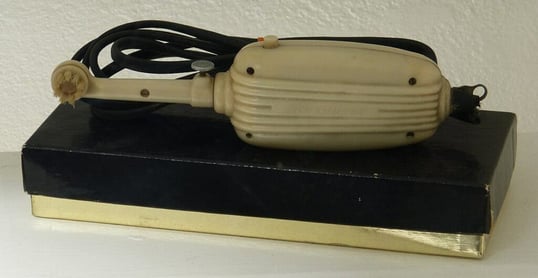
Electric toothbrushes are seen as the best method for cleaning your teeth, and is probably how you cleaned yours this morning! The fast moving, oscillating bristles provide better plaque removal than manual brushes while also reducing the effort required.
The first electric toothbrushes were created in the 1930s for people who struggled to clean their teeth; namely those with limited mobility and for orthodontic patients. Since then, they’ve evolved from a device that had to be plugged in to use, to the small, sleek, USB-C charged ones we have today!
Electric toothbrushes would likely have still been invented, but it was the accessibility requirements of specific groups that drove the invention.
Captions & Subtitles
If you’ve ever scrolled through TikTok videos while your phone is muted, watched a TV screen in a noisy, public environment or enjoyed a TV series in a language you don’t speak then you’ve probably used captions and/or subtitles.
These were initially developed for deaf and hard-of-hearing audiences but now benefit millions of people daily. Personally, I will always have the volume off on my phone – so if your video doesn’t have captions, I’ll be scrolling straight past!
(If you are wondering about the difference between these two: closed captions describe noises such as laughter, bangs and music as well as any speech, while subtitles reflect the speech only).
Typewriters
Slightly different to the rest – you probably haven’t used one recently (or ever), though the evolution of the typewriter is evident whenever you are using a computer.
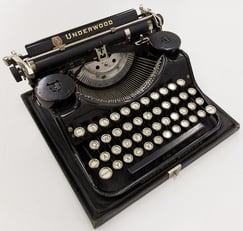 It is unclear exactly when typewriters were first invented, as a few people built similar machines at around the same time. Two of the first known models were created at the beginning of the 19th century for the same reason: to allow a blind person to write.
The most well-known of these is Pellegrino Turri, who wanted to help his blind friend Countess Carolina Fantoni da Fivizzano write letters. It is simple to understand how much easier it is to type than to write if you are blind - "touch typers" can type without ever looking at the keyboard.
From the 1820s, more typewriter models were introduced, including several designed specifically to aid blind people - including one created by William Hughes that became a standard in British schools for the Blind.
What Does Disability Pride Mean to Me?
I have an invisible, dynamic disability. This means that, unless I tell you, you're never going to know! I can run a 10km race one day and barely have the energy to sit upright another. This unpredictability, exhaustion, and regularly feeling very ill is life with chronic migraines. With medication, treatments and accommodations however I am able to mostly manage them. The biggest accommodation for me thankfully comes naturally with my job: working from home! I am able to sit in a cool, dark, quiet room to work instead of a loud, busy and bright office.
Disability Pride for me is about raising awareness for the huge diversity amongst disabled people and taking time to learn more about other peoples' experiences and challenges. For example, my experiences of disability are very different to a wheelchair user's.
Conclusion
Accessibility requirements drive innovation: forcing us to look at problems from new angles. The main driver is beyond this though – everyone should be included and able to join in wherever that is possible. This brings us to the concept of universal design: designing something that is usable by all people to the greatest extent possible, without the need for adaptation or specialised design.
When universal design (or just the diversity within humans) is considered at the design stage, we find that everyone’s life is improved. Of course, part of that improvement comes from being able to socialise, work alongside and share ideas with those who, in the past, would have been completely excluded.
