



Recently I was asked by one of my colleagues how I became a regular speaker at data events and what my advice would be for others who want to get started...
Initially it came as a little bit of a shock. I still see myself as a new speaker, but on reflection, I realised how far I’ve come since I first decided I wanted to get up on stage.
For context, I gave my first session in March 2025 at the user group I co-organise, Bristol Fabric and Power BI. I then spoke at my first conference in June 2025, giving a lightning talk at Data Ceili. By the end of that first year, I'd given 5 talks across two topics. This year started slower - my first event was in April, but in the 4 months since then I’ve given 10 sessions, covering six different topics, and I have two more new sessions that will debut in Autumn. This has included flagship events like Data+AI Summit & SQLBits, which each draw thousands of attendees and hundreds of speakers.
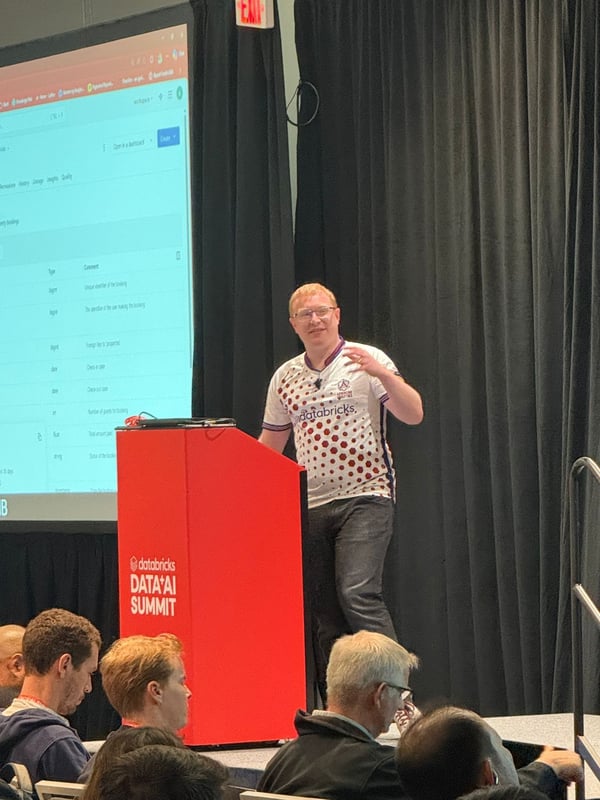
But my journey actually started over two years ago, when I joined Advancing and met the people who would go on to be my mentors (not that we ever put a label on it!). I’ve been reflecting on that journey and wanted to share everything I’ve learned from all the people who’ve helped me along the way. Hopefully it might help you get started too.
Getting to your first submission
The story of how a given speaker first ended up appearing on stage is different for everyone who does it. But a common thread is that they were inspired to speak whilst watching someone else give a session.
For me that happened at Big Data LDN in 2023. I saw Simon Whiteley give a session on Data Products which I found insightful, and I also really enjoyed a Women in Data panel that included Grace O’Hallaran, Tori Tompkins, Gavi Regunath and Bethany Archer. I was inspired by both sessions and decided I wanted to get on stage. I also decided I wanted to work at Advancing at the same time but that’s a different story!
When I joined Advancing in June 2024, I came with the idea that I was going to follow in the footsteps of those who helped build the company as a community-oriented brand. But even with that mentality, how do you actually get up on stage for the first time? The two bits of advice that stuck with me came from Johnny Winter and Craig Porteous.
Johnny’s advice was quite simple: get out to your local user groups and conferences. Meet other likeminded people in your local area & build a network. He told me about a new Power BI user group was starting up in my local city and put me in touch with the organisers (Mark Endicott and Ant Couzens). I went along to the first session, offered to help out and by month three I was part of the organising team… I still am 2 years later.
Going to my local user group did a number of things for me:
Firstly, it enabled me to listen to a host of different speakers give talks on a wide range of topics. I learned and grew as a data professional from their insights, but also, I started to develop a taste for what I thought made a good session. This will be slightly different for each person; we all have individual tastes and there are many ways to give a session. When you’re writing a session abstract or content, knowing what you would enjoy and want to attend, will improve your writing.
Secondly, I started to make connections with others & build my network. Mark, Ant and the group’s regulars have become friends and so the idea of speaking in front of them became easier. Chatting in the pub after the session helped me work out what might be interesting to give a session on, and meeting speakers gave me the network I needed when I wanted to take my talk on tour. The social side of attending groups and events is one of the things that keeps me going back. The data world really is an awesome community!
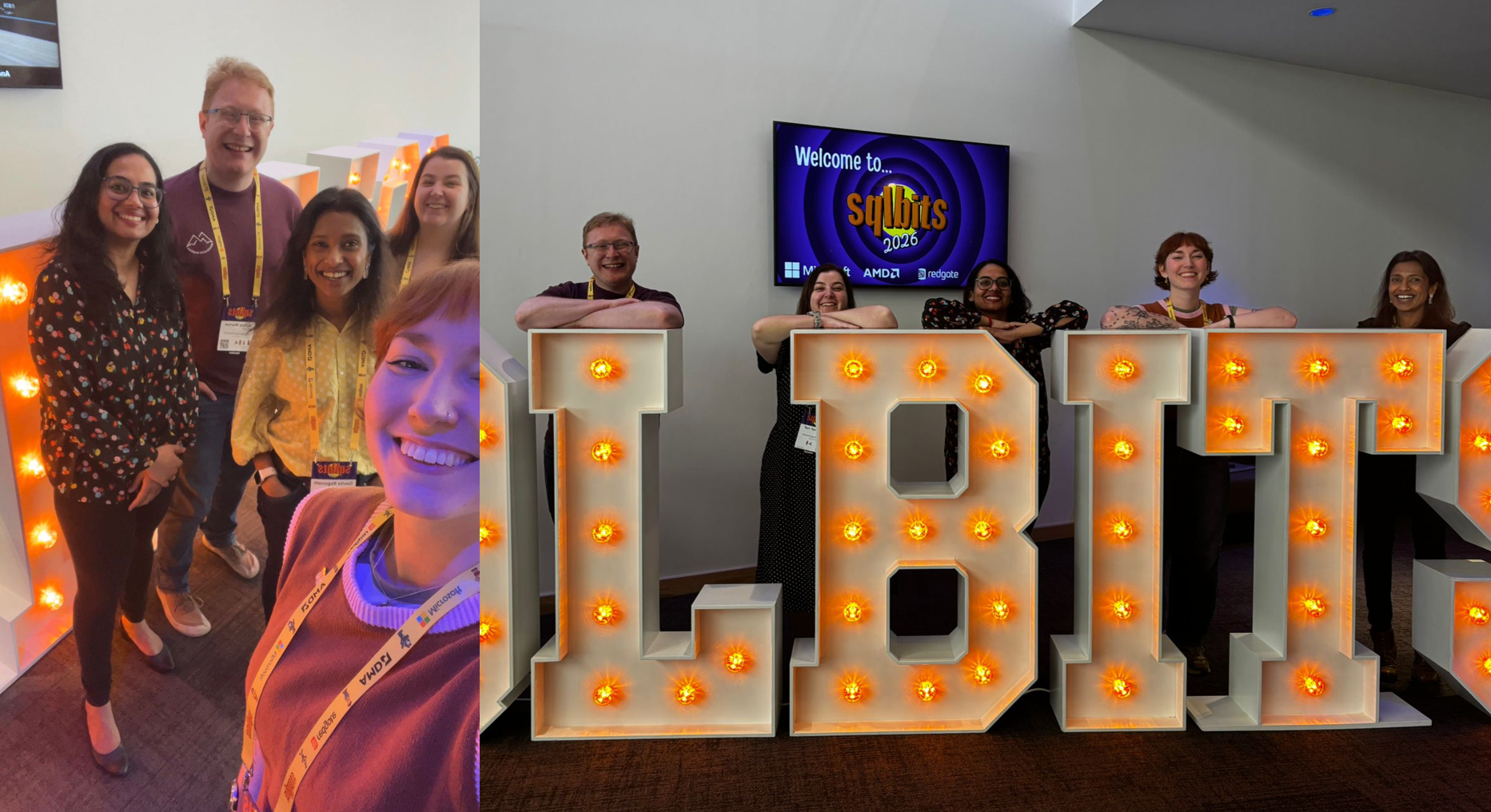 Craig’s advice was also simple and effective: talk about what you know. At first, I didn’t know what the topic of my first session would be. I wanted to talk about something that was ground-breaking, on the cutting-edge of technology and entirely unique to me. Effectively I wanted to show off. But Craig helped me see that covering a fundamental topic but with my take on it, and in my voice, might be what could help someone understand a specific problem
There’s space for sessions of all levels, and often the best session isn’t the one showing off the cutting-edge solution, it’s the one trying to help others genuinely understand a problem that everyone encounters at some point. I’ve since found that I get the most enjoyment from making & delivering sessions that start from basics and work up.
The most important thing about topic selection though, is that you feel comfortable talking about it. It's not just the content you should prepare for, you should feel able to answer reasonable questions on the topic. You don't have to be THE expert though. It's ok to not be able to answer every question, although you don't want to be in a situation where you can't answer any!
Your first session
Next step: you’ve got your first topic selected and you’ve found a local group that you feel comfortable talking at. It’s time to float the idea of you speaking with your local group organisers.
Most groups love to have speakers from their local community step on stage, and the organisers are normally keen to help you out to make that happen. If you need a sounding board for the content or advice on how to deliver the talk, they’re normally happy to help.
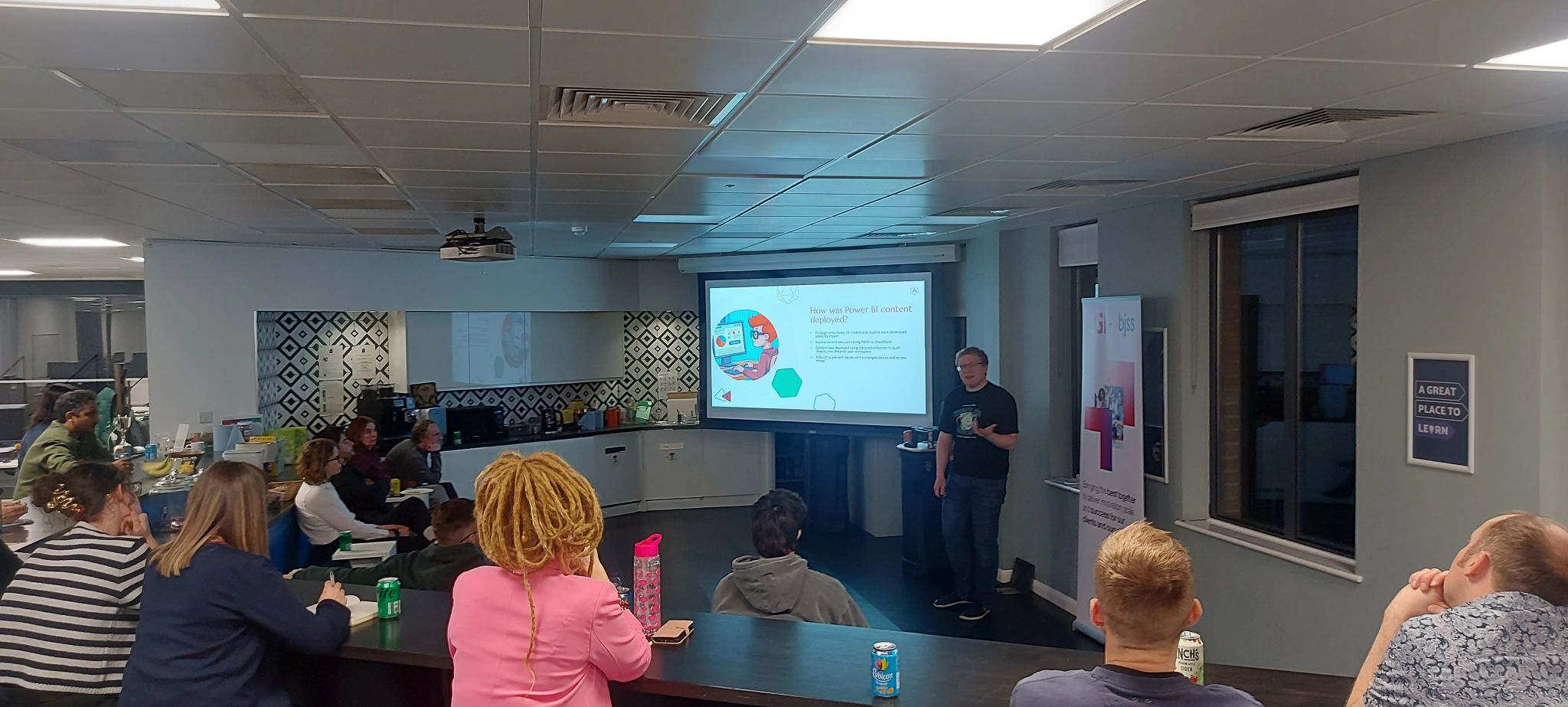 But now it’s time for the curtain to raise. You’re feeling nervous right? It’s common. Even some of the most prolific speakers have said they still get nervous. I recently read Ted Talks: The Official TED guide to Public Speaking by Chris Anderson, the organiser of the TED Talks conferences. In it he mentioned that surveys on our greatest fears often have public speaking as the most widely selected answer. Chris goes on to say that being nervous for public speaking is what motivates us to prepare properly. That stuck with me.
Preparing well for your session is so important, especially when you are first starting out. My personal preparation is to have meticulously created the slides/demos by hand without using any AI assistance, so that I know the content inside out. I hate reading from a script and find talks given that way are less engaging. I prefer to vibe my talk in the moment, but I can only do that because I know my visuals & demos inside and out and I’ve thought about how I want to guide you through them. I’ll often find myself practicing sections of my talk in the shower or running through them mentally at random points in the days leading up to a talk. However you want to prepare for your session, you need to make sure you feel comfortable in the moment on the day.
Because of that upfront work, I’m often not that nervous for the actual talk on the day. The bit I personally get most nervous for is the Q&A. It’s important to remember that our community is full of really nice people. The point of our groups and sessions is to raise our collective knowledge by sharing the interesting things you’ve learned. If you get a tough question, it’s probably someone who’s curiosity you’ve genuinely peaked and they aren’t asking it to be mean. I now see that as a good thing – you’ve shared your passion for the topic and inspired someone else enough that they’ve thought of a question you hadn’t considered yet. Remember it’s always ok to answer with “I don’t know”! It’s just another learning opportunity for you to broaden your own knowledge (& maybe make some more content on it!)
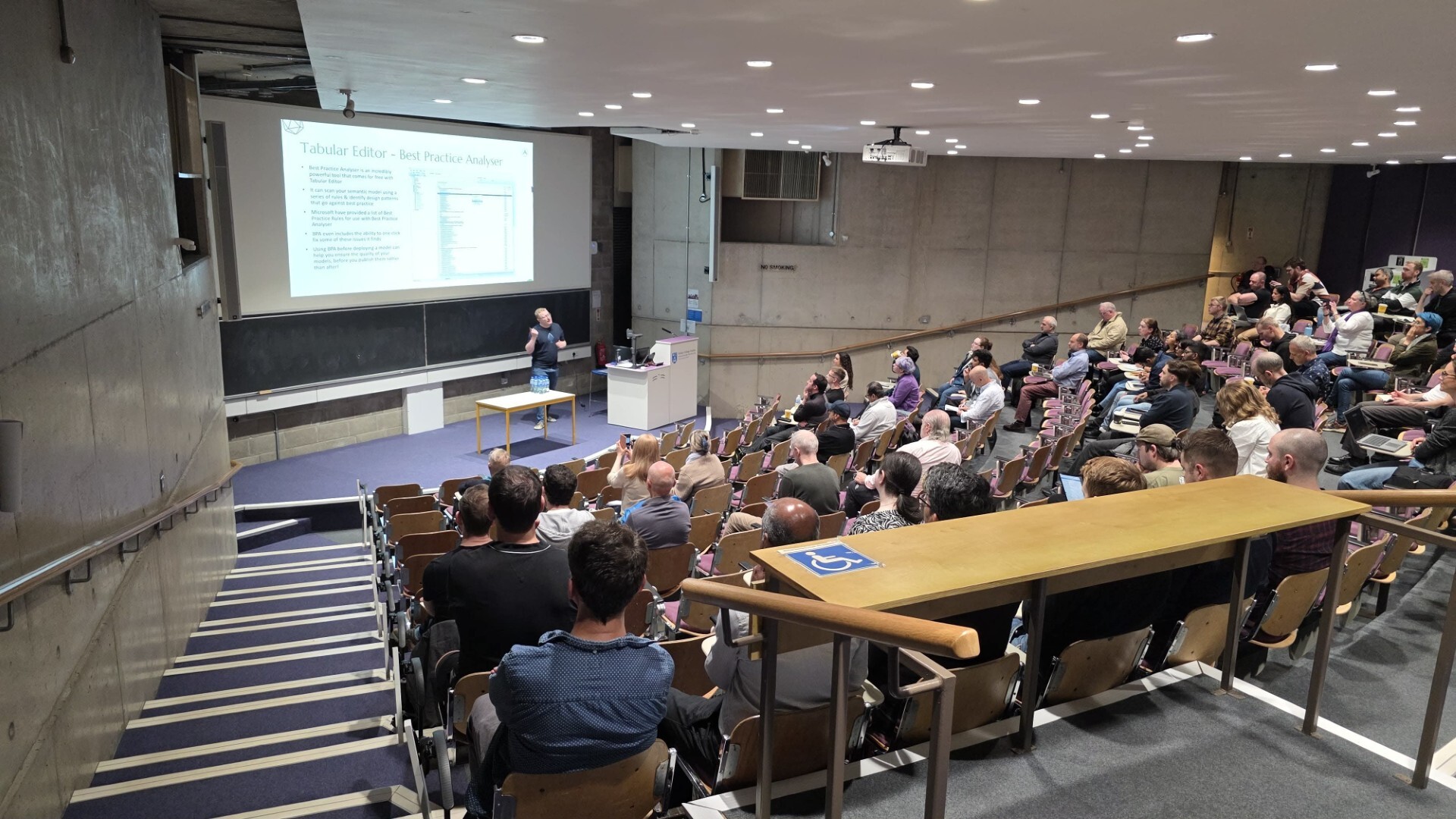
The best piece of advice I can give though is to try and relax during your session, so that you enjoy it. If you enjoy it, the audience will generally have a better time. Try not to panic if something doesn't go to plan or you stumble over words/sentiment. The audience doesn't know your plan, so even if it feels like a massive mistake to you in the moment, provided you don’t flap about it, most of the time the audience will have no idea it even happened. I find that aiming for confident but humble (whilst vehemently avoiding arrogance) is the ideal. And for me that stems from picking the right topic and preparing well upfront.
After the session
Congratulation, you’ve just finished giving your first session! Hopefully you enjoyed it and now want to do more. But where to go next?
First step, get feedback! Especially from other speakers who happened to be in the room/on the call. Their perspective can help you understand what you still need to work on. Generally, that isn’t going to be the content! It’s very rare that I’ve seen a talk that didn’t land and when that was the case, it wasn’t because of the content.
My first time speaking, the other speaker at the event, the incredible Claire Edgson, pointed out that I kept turning and pointing at the slides on the screen, and she couldn’t hear me when I did that. Now I’m more conscious about how I stand on the stage and about making sure I up the volume if I do need to turn away and point (which I also try not to do unless strictly necessary!).
Similarly, after my first conference session at Data Ceili, Sue Bayes joked that she was so concerned that I wasn’t taking enough breaths that she missed some of my content! I now intentionally try to speak slower and not overfill my session with content, though I definitely don’t always live up to that promise!
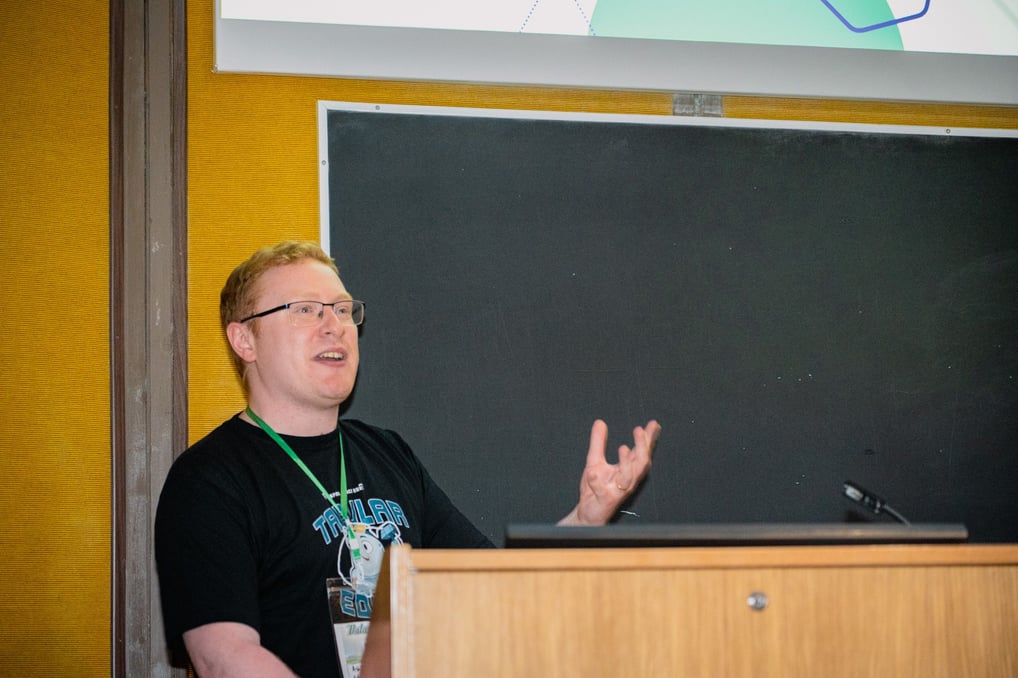
That feedback, and plenty more of it is what has helped me to improve as a speaker and “content creator” (as much as I hate using that phrase to describe what I do, I can’t think of a better one!).
Onto the next!
If you enjoyed giving the talk, then take that session on a tour to other user groups before you write another. As I mentioned earlier, if you've been attending your own group regularly, chances are you’ve met an organiser of another group who came to yours as a speaker. If not, your group’s organiser probably knows some other organisers (the data community is a small world) and they’d likely be happy to give you an introduction.
If you want to speak at conferences or larger events, they normally source speakers via Sessionize (some user groups also source speakers from there too). Though, I would recommend working your way up to these events instead of jumping in at deep end. Speaking at smaller events helps you hone your skills and get feedback that you can use to refine your content & abstract.
I spoke at a conference quite early on in my journey and as fun as it was, I was definitely less prepared for that experience that I am now. I still enjoyed it (so much I went back to Data Ceili this year) and got some positive feedback, but it did push me a long way out of my comfort zone to travel to a different country and attend a conference where I only knew one other attendee beforehand. I know I did a much better job the second time around, once I was more comfortable in my own speaking process.
If/when you start to go down the Sessionize route to apply for conferences, expect to get rejections. There are often significantly more speakers applying to conferences than there are slots available. Try not to be disheartened by not getting accepted; instead use it as an opportunity to refine your pitch and abstract. Here is my submission history from Sessionize:
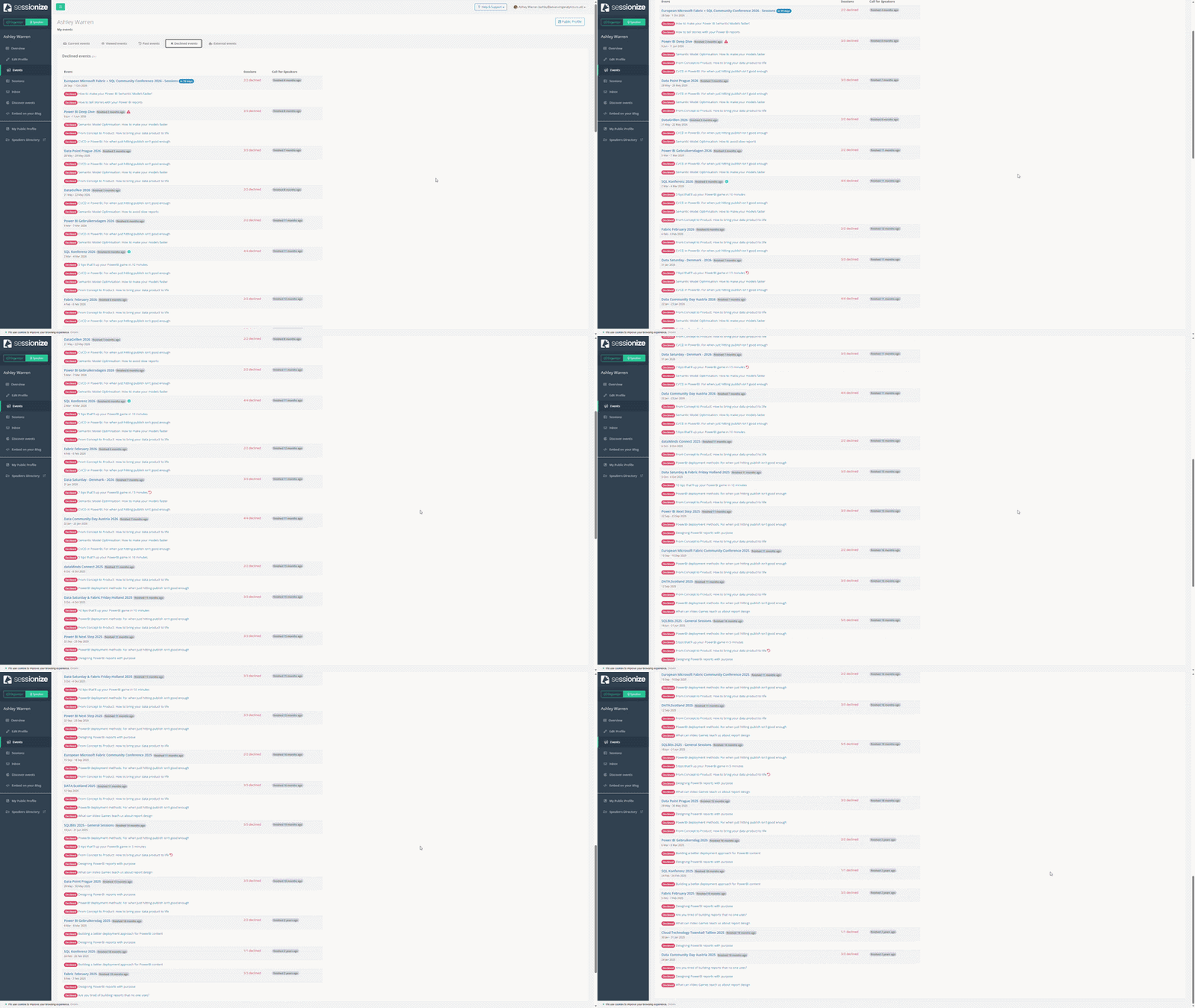 I’ve been accepted to give 6 conference talks via Sessionize and had a total of 71 rejections, a success rate of 7.8%. And that is after that success rate has drastically increased over the last few months. My advice: expect to see a sea of red and then that makes the occasional green even more exciting!
You have a personal brand
The last piece of advice I would give to an aspiring speaker was originally given to me by Isi Turner. They’ve had one of the biggest impacts on my content by introducing me to the concept of personal branding and helping get me started building my brand. They helped me to think about the tone of my content and encouraged me to be more consistent in the cadence of my content. This year I’ve started posting consistently on LinkedIn which lets me share in smaller doses more frequently. This has also helped me create content across a wider variety of topics, which in turn has inspired more ideas for full length talks. I know this has helped me to secure more speaking slots.
They also recommended reusing content across different mediums. I’ve already mentioned that talks resonate differently across audiences, and the same is true about medium you use. Some people engage better with blogs over talks, whilst others get more from shortform content or videos, etc. Reusing the same content across a variety of different mediums gets you the most bang for your buck and helps you reach more people and share knowledge wider. Provided you have consistent branding and tone of voice across all those outlets, this then helps you become a more trusted voice.
Heck, this very blog started life as LinkedIn post, until Terry McCann suggested I convert it into a blog too!
The big caveat
By this point, you might be starting to realise that this all sounds like a lot of work. And you’d be right, in a sense. My Autumn 2026 work travel schedule alone sees me visiting more countries than I did in the first 24 years of my life. That sounds glamourous, but in reality, it is a lot of effort both mentally and physically to keep on top of.
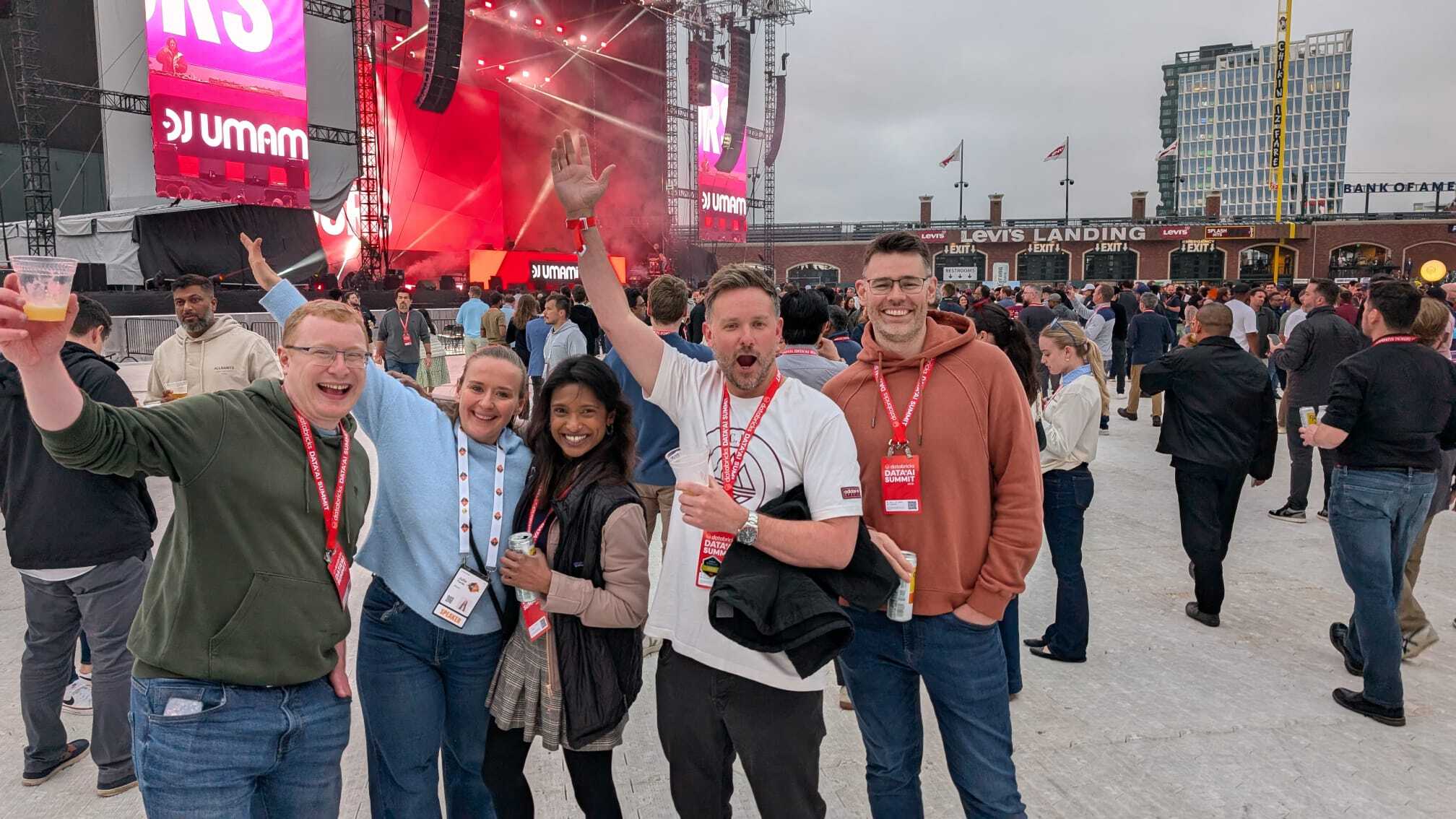
It all comes down to a matter of perspective. I don’t see going to my local user group as “work”. To me, it’s going and hanging out with friends and talking about something I have a genuine passion in. I don’t see traveling to a conference on a Sunday as giving up part of my weekend for work, but as getting to go to meet friends, have fun & learn. Speaking has helped me see the world and taken me places I never thought I'd get to go (including on the field at the San Francisco Giants stadium watching the Chainsmokers!)
The other thing to consider is that most of these events are free or not-for-profit and so can’t cover all a speaker’s expenses. I’ve been lucky to be supported from a time and money perspective by Advancing, but even then, I’ve put in a significant amount of my own time, energy and, to an extent, money to make all of this happen.
You don’t have to start big and give all your time and resources to this pursuit though; I certainly didn’t at first. Over time I’ve taken on more, because I’ve enjoyed everything I’ve done and wanted to! We all go through various phases of life, and I don’t know if I will always feel this way - but for now, doing all of this has been fulfilling, and more importantly, fun. It’s enabled me to find and befriend people who share a similar passion as I do.
We have a wonderful little community, full of interesting and amazing people. I’m honoured that those same people are interested enough in my perspective to give me the opportunities I have been given to share it.
And here’s the kicker…
Whoever you are, whatever your background, if you have interesting content to share, then our community stands ready to support you too!