


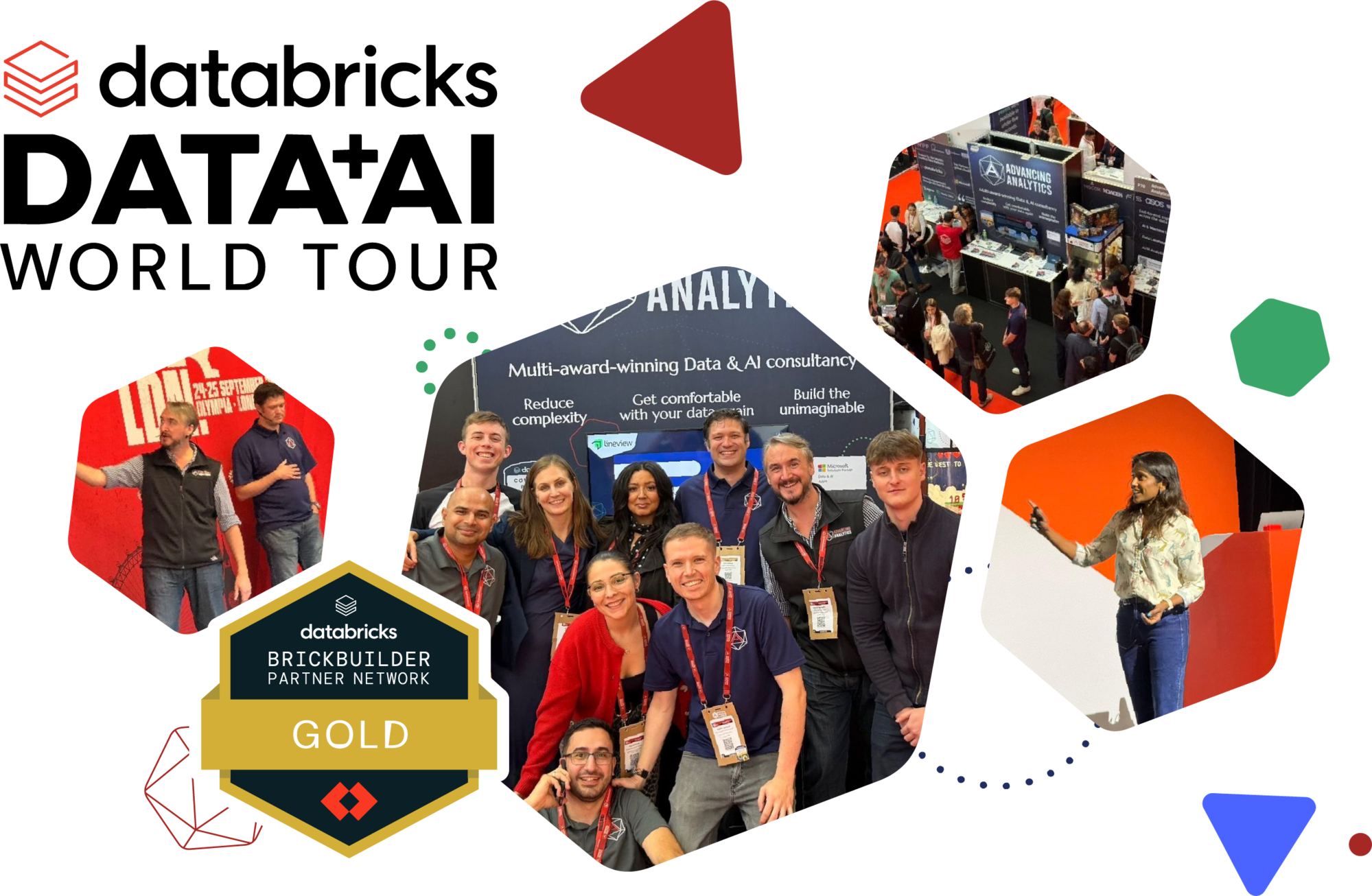
Dr Gavita Regunath in conversation with Tanya McCormack, Sky, Aisha Arshad, Legal & General and Tosin Sonubi, e.on next in a Women in Data® panel discussion about the next generation of Data Engineering talent.
There’s a lot to be positive about when it comes to AI in the workplace. It’s helping people move faster, taking repetitive work off their plates and making it possible for teams to do things that, even a couple of years ago, would have taken far more time, effort and people.
I see that first-hand in engineering. The boilerplate pipelines, the first-pass transformations, the tests nobody particularly wanted to write; all that work can now be done much faster with the help of AI. A good engineer working with the right tools can get through in an afternoon what might once have kept a graduate busy for the best part of a week.
On the face of it, that sounds like progress. And in many ways, it is. But there’s something about it that worries me.
The work we’re automating wasn’t always exciting, but it was never just grunt work either. It was how people learned. It was where junior engineers made mistakes, figured out why something had broken, asked more experienced people for help and gradually developed the judgement that you simply don’t get from a course or certification.
How Juniors Became Seniors
So if AI removes more and more of those early-career tasks, and businesses respond by deciding they don’t need as many junior people, we need to ask ourselves a fairly uncomfortable question: who becomes our next generation of senior engineers?
The talent gap I’m most concerned about isn’t necessarily the one we have today. It’s the one we could be creating for ourselves five years from now.
That question was on my mind in September when I hosted a Women in Data panel at Big Data LDN with Tanya McCormack from Sky, Aisha Arshad from Legal & General and Tosin Sonubi from E.ON. What struck me listening to them was that none of these organisations are sitting back and waiting for the hiring market to solve the problem for them. They’re developing people themselves, and with AI changing what early-career work looks like, I think there’s a lot we can learn from that.
Hire for Curiosity, Not Your Current Stack
The data engineer job has changed massively in the last two or three years, and I don’t think that pace of change is going to slow down. Pipelines still matter, of course, but engineers are increasingly supporting AI workloads, working closer to product teams and, as Tosin put it during the conversation, thinking about how all of this can be deployed reliably at scale.
That makes hiring against a very specific list of technologies increasingly difficult, because by the time you’ve written the job description, interviewed people and made the offer, there’s every chance part of your carefully constructed list has already moved on.
One of my favourite stories from the panel was about an engineer who moved into data from mechanical engineering. They didn’t arrive with the perfect data CV or years of experience using exactly the right platforms. What they had was curiosity, a strong engineering instinct and the ability to work through a problem.
If we start looking for those qualities rather than simply searching for people whose CV happens to match our current technology stack, the talent pool suddenly becomes a lot bigger and, I’d argue, more interesting.
Look for the Wider Skill Set
At Sky, moving into data engineering through a secondment means applying for it, and I really like the thinking behind that, because the act of putting yourself forward tells you something. It shows that somebody genuinely wants the opportunity rather than simply being moved into a role because there happens to be a gap.
Tanya also talked about looking for people who notice when something isn’t working and, rather than walking past it or assuming it’s someone else’s problem, start thinking about how they could fix it.
Aisha made a similar point about curiosity, but in a way that has stuck with me. Her example was baking cakes. Someone who is prepared to experiment with a bake, work out why something didn’t quite work and keep tweaking it until it does is demonstrating many of the same behaviours you want from somebody working with data.
And Tosin looks at what happens when things go wrong, which is probably when you learn the most about someone. Anyone can look good when everything is green and the build works first time. Drive, resilience and curiosity tend to reveal themselves when it doesn’t.
Mentoring is Becoming the New Apprenticeship
Legal & General has an apprenticeship scheme and brings junior developers and engineers into teams where more experienced people are expected to mentor them. The juniors learn faster, but the benefit goes both ways because mentoring also teaches experienced engineers how to lead, explain their thinking and pass on knowledge that might otherwise stay in one person’s head.
AI makes that kind of approach even more important. If the tools are increasingly doing the work that juniors once learned from, then we have to become much more deliberate about replacing those learning opportunities rather than assuming development will somehow happen around the edges.
That might mean pairing junior engineers with experienced people on real problems, asking them to review and challenge AI-generated work rather than simply accepting it, and giving them more exposure to the decisions behind the code: why you’ve designed something in a particular way, what trade-offs you made and what you do when the obvious answer turns out not to be the right one.
The Typing Was Never Really the Apprenticeship. The Thinking Was.
Our job now is to make sure we don’t automate away the opportunities people had to develop that thinking. Learning time costs money but it's important that we invest in this thinking.
I asked the panel what they would do if they could give people five days a year for learning, and Tanya’s answer made me smile because Sky already gives engineers considerably more than that, with around one day a month set aside against a learning plan agreed with their manager.
What I found particularly interesting was that they track it. If people aren’t using the time, they want to know why, because simply telling someone they’re allowed to learn doesn’t mean much if the reality of their workload makes taking that time impossible.
Of course, giving up that much engineering capacity for learning is a difficult conversation in most businesses because there’s always something that needs delivering, and there will always be pressure to focus on what produces an immediate return. But that’s exactly why learning has to be treated as an investment rather than something people do when everything else is finished.
Aisha talked about starting with a proper skills-gap analysis and getting the organisation behind closing those gaps, while Tosin focused on something that often gets left out of the technical training catalogue altogether: stakeholder relationships and influence.
I think that becomes even more important as AI develops. If AI can increasingly help an engineer write the code, then the engineer who can understand the wider problem, make a judgement call and explain a difficult trade-off to somebody in the business becomes more valuable, not less.
People Stay Where They Feel They Matter
Of course, there’s no point investing all that time in developing people if they leave as soon as they develop their skills. What came through from the panel was that retention isn’t necessarily about one big initiative. Tanya talked about helping individual contributors understand how their work fits into the bigger picture, while Aisha pointed to structured mentoring alongside the fundamentals of fair pay and good benefits.
Tosin put it most simply: people want to know that their manager actually cares about where their career is going.
That sounds obvious, perhaps, but it’s easy to lose sight of when projects are busy and deadlines take over. People want to make an impact with their work, but they also want to feel they are getting somewhere by doing it.
We Need to Rebuild the Bottom Steps
The panel’s advice for anyone wanting to move into data engineering was reassuringly straightforward: find a mentor, understand the skills you already have that can transfer across, get the fundamentals right and think of your career as a staircase rather than one enormous leap.
I’d give data leaders much the same advice, but with one important addition.
AI is starting to knock out some of the bottom steps of that staircase.
We can’t pretend that isn’t happening, and I don’t think the answer is to slow down AI adoption simply to preserve work that technology can now do more efficiently. But we do need to be honest about what else disappears when we automate those tasks, particularly the opportunities they gave people to learn, make mistakes and develop judgement.
If we remove those opportunities, we have to replace them with something better.
That means continuing to hire juniors even when the immediate business case might look different, giving them real problems rather than artificial exercises, surrounding them with people they can learn from and accepting that developing talent takes time that could otherwise be spent delivering.
Because if we don’t rebuild those bottom steps deliberately, we could find ourselves a few years from now with incredibly capable AI, increasingly sophisticated platforms and nowhere near enough experienced people who understand how to challenge, shape and take responsibility for what those systems produce.
And that, to me, is the much bigger talent problem.
Thanks to Tanya, Aisha and Tosin for a properly honest conversation, and to Women in Data® and Big Data LDN for creating the space to have it.
Topics Covered :

Author
Gavita Regunath
Dr Gavita Regunath is Chief AI Officer at Advancing Analytics, Forbes Technical Council, x3 time Databricks MVP and Anthropic-certified practitioner. She helps leadership teams make confident AI investment decisions, grounded in numbers not noise. With 15+ years’ experience, she specialises in taking AI from proof of concept to secure, scalable delivery, with a strong focus on trustworthy AI and practical adoption.