




Databricks used Data + AI Summit 2026 to make a clear strategic statement: the future of enterprise AI is not a disconnected layer of copilots, dashboards and single-issue solutions. It is a governed, real-time, agentic operating model built directly on the enterprise data foundation. CustomerLake is one of the clearest examples of that strategy in action.
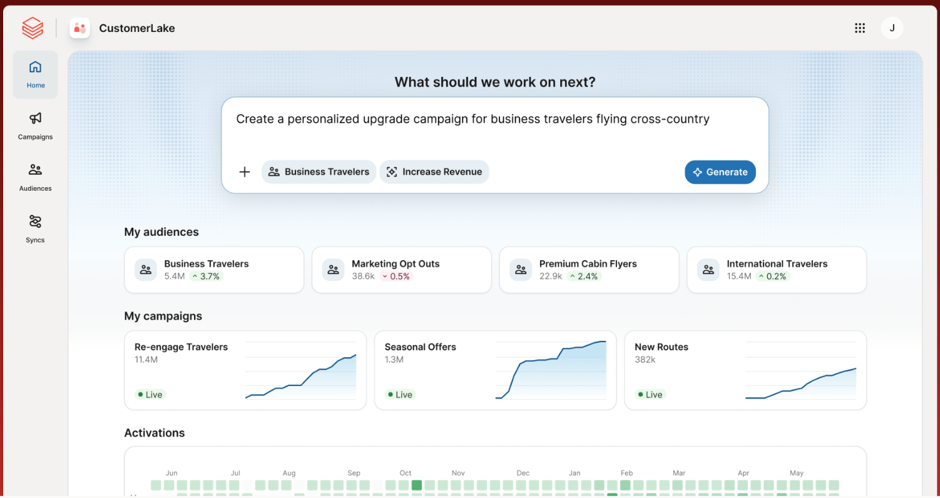
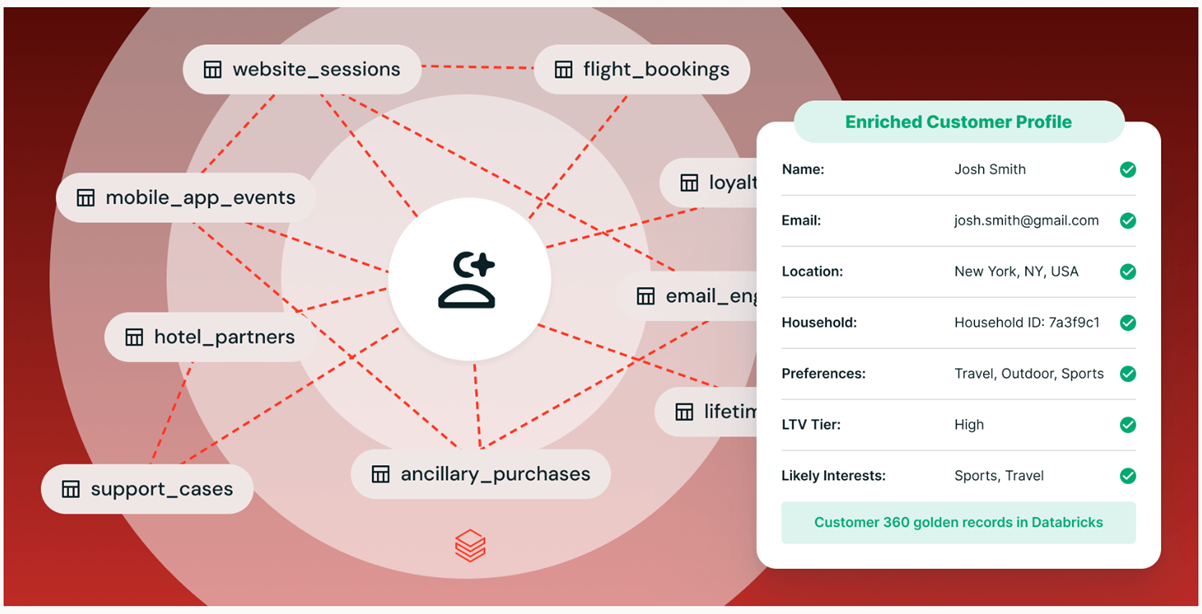
Announced on 16 June 2026, Databricks CustomerLake is a new agentic Customer Data Platform built natively inside Databricks. It brings Customer360 (a holistic view of data interactions), identity resolution, audience building, campaign automation, activation and personalisation into the same lakehouse environment where customer data, AI models and governance already live.
For organisations already investing in Databricks, this is a significant shift. CustomerLake challenges the idea that the CDP should sit outside the enterprise data platform. Instead of copying sensitive customer data into another “martech” (Marketing Tech and Software systems) system, Databricks is positioning the Lakehouse itself as the place where customer intelligence, AI decisioning and campaign activation come together.
Why this matters
Traditional CDP architectures often create yet another customer data store. Data is extracted from the warehouse or Lakehouse, transformed into a marketing-friendly profile, then pushed into campaign tools. That model can work, but it often introduces latency, duplication, inconsistent governance and a gap between analytics teams and marketing teams. In simple terms CDPs traditionally make it harder to access your data for other use cases, this is built on the open foundations of the Lakehouse making it simple to utilise your data as you see fit, removing that hard blocker that we can encounter when uses third party solutions.
CustomerLake addresses that by embedding the CDP into Databricks, governed by Unity Catalog, with Lakehouse Federation allowing teams to access trusted customer data.
That is the architectural point that makes CustomerLake interesting. It is not just “a CDP with AI features”. It is Databricks extending its Data Intelligence Platform into marketing operations, making customer engagement another governed AI workload on the Lakehouse.
The technical idea: from Customer 360 to agentic action
CustomerLake is built around two core agentic capabilities.
Profile Agents help turn raw customer data into business-ready Customer 360 profiles. They prepare data, identify quality issues, support third-party enrichment and help unify fragmented records into trusted golden profiles. Databricks also describes Agentic Identity Resolution as a combination of deterministic, probabilistic and agentic workflows, with feedback loops to improve match logic and data quality over time.
Campaign Agents help marketers move from static campaign workflows to always-on engagement. These agents use governed customer context to build audiences, recommend next-best actions, activate across channels and optimise against business goals.
This is where Databricks’ broader DAIS strategy becomes important. At Data + AI Summit 2026, Databricks framed its announcements around three themes: Context, Control and Choice. CustomerLake sits directly within this strategy, also relying on the wider platform direction: Lakebase and real-time Lakehouse foundations for operational workloads, Genie for natural-language analytics, Agent Bricks for agent development, and Unity AI Gateway for governance and control.
Why should you care?
For you, the value proposition is simple: CustomerLake reduces the distance between data, AI and customer action.
Marketing teams want faster audience creation, better personalisation and less dependency on long data request queues. Data teams want fewer duplicated pipelines, fewer uncontrolled data exports and stronger governance over customer data. CustomerLake is designed to serve both.
This is not just implementing a new Databricks product. This is helping you modernise the operating model around customer intelligence:
- Define governed customer data products in Unity Catalog.
- Build an AI-ready Customer 360 on the Lakehouse.
- Add identity resolution and profile enrichment.
- Train or serve propensity, churn, lifetime value and next-best-action models.
- Use agents to translate campaign goals into audiences, actions and measurement loops.
- Activate into existing martech and adtech platforms without creating another customer data silo.
High-value use cases
Retail churn and win-back
A retailer can unify loyalty data, transactions, app behaviour, stock availability and marketing engagement into a Customer 360. A Campaign Agent can then identify customers likely to lapse, recommend the best offer, suppress customers with recent complaints, and activate the audience.
Financial services next-best-action
A bank or payments provider can combine customer profiles, product holdings, eligibility rules, risk policies, service interactions and channel preferences. CustomerLake can support personalised onboarding, merchant growth campaigns, cross-sell recommendations and retention plays, while keeping governance close to the data.
Travel and hospitality service recovery
A customer has a delayed flight, recent app activity and a high loyalty score. Rather than waiting for a batch campaign, an agentic campaign loop can trigger a real-time service recovery action: lounge access, rebooking support or a personalised retention offer.
Media and subscription retention
A streaming or publishing business can combine content engagement, subscription tenure, payment history and propensity models. A Campaign Agent can detect declining engagement and trigger the right intervention before cancellation.
B2B account intelligence
For B2B organisations, CustomerLake-style architecture can unify CRM, product usage, support tickets, marketing engagement and commercial data. Agents can recommend target accounts, identify expansion opportunities and generate account-specific campaign briefs.
Summary
CustomerLake is not just a marketing product. It is a blueprint for how enterprise AI should be built - close to governed data, integrated with operational systems, measurable through the lakehouse, and controlled through a single security and governance model.
CustomerLake signals where Databricks believes the enterprise stack is heading - not toward more disconnected AI tools, but toward governed agents operating directly on trusted data. For marketing leaders, that means faster personalisation. For data leaders, it means fewer silos. For AI teams, it means a practical path from models to measurable business action.
Here at Advancing Analytics we are spending a lot of time cutting through the noise and working out what these new capabilities actually mean in practice. Some of the announcements are genuinely exciting, but the real value comes from understanding how they fit into your data, governance, operating model and business priorities. Drop us a message if you want any more information on any of the announcements from DAIS!